
Are you thinking about getting a hair transplant and don't know which clinic to choose? When comparing options, it's common to look at the price and before-and-after photos, but there are other aspects worth considering before making a decision.
To choose one reliable hair transplant clinicYou should check that the surgery is performed by a licensed doctor, that the alopecia is studied through a prior diagnosis with trichoscopy, that the donor area is planned long-term, and that there is post-operative follow-up with scheduled check-ups.
In this guide we explain the eight medical criteria you should consider when evaluating a clinic, what information to request before hiring, and how to recognize possible warning signs before making a decision.


Dr. Raquel Amaro Silva
SURGEON PONTEVEDRA
Collegiate No. 362607457
Graduated in Medicine and Surgery from the University of Santiago de Compostela with a Master's Degree in Aesthetic Medicine and Trichology and Hair Micrograft. She currently works as a doctor and hair surgeon in Hospital Capilar as head of the headquarters Hospital Capilar Pontevedra.
Before deciding where to have a hair transplant, it's advisable to analyze how each clinic operates and what kind of care they offer before, during, and after the procedure. These are the eight fundamental aspects that you should check:
One of the most important aspects when choosing a hair transplant clinic is knowing who will perform the intervention and what qualifications do they have? Hair transplantation is a surgical procedure that requires prior medical evaluation, planning tailored to each patient, and the ability to prevent and address any potential complications that may arise.
Before making a decision, check who will be responsible for the surgery and verifies his collegiate in the corresponding official register. This verification confirms that the professional is registered with the official medical association, a necessary requirement to practice medicine in Spain. To do this, you can request their full name and membership number and look them up in the Public consultation of members of the General Council of Official Colleges of Physicians (CGCOM).
However, being a registered professional does not, in itself, guarantee specific experience in hair transplantation. Therefore, it is also essential to know their experience in hair transplantation, their training in this field, and their professional background.
Furthermore, membership in scientific societies, such as the Spanish Society of Aesthetic Medicine (SEME) and Spanish Society of Hair Restoration (SERECAP), can provide additional information about your connection to the professional field.
En Hospital Capilar, all surgeons belonging to the medical team of Hospital Capilar They are registered professionals and have extensive experience in the field. Their knowledge and professional track record allow us to offer rigorous medical care tailored to each patient's needs, from the initial assessment to the planning of the procedure.
If a clinic does not inform you who will perform the procedure, does not allow you to verify their registration, or does not clarify who will be the medically responsible doctor for the surgery, you should resolve these issues before hiring them. The identity and qualifications of the professional should be part of the information you receive before making a decision.
A reputable hair transplant clinic should not recommend surgery without First, study the cause of hair loss, the type of alopecia, its evolution, and the condition of the donor area. This assessment determines if the patient is suitable and allows for the design of a treatment plan tailored to their needs.
One of the tests that can be performed during the medical evaluation is the trichoscopyThis technique allows for magnified observation of the scalp and hair. This examination helps assess aspects such as hair density, hair diameter, signs of follicular miniaturization, and skin characteristics. The results are interpreted in conjunction with the patient's medical history and physical examination.
Not everyone with hair loss is a candidate for a transplant. When hair loss is still active or the donor area does not meet the necessary conditions, it may be advisable to postpone the procedure and first address the alopecia through medical treatment or rule it out.
In fact, a doctor recommending against surgery, or postponing surgery, when suitable conditions do not exist is a sign of clinical judgment. The surgical indication should respond to the patient's needs, not to the intention of closing a budget.
En Hospital Capilar we continue with the next one proceedings:
Be wary of proposals that specify a number of follicular units or a surgery date without sufficient medical evaluation. Before committing, make sure they explain the diagnosis, the reasons why the intervention is indicated, and the limitations of your case.

La donor zone In a hair transplant, the donor area is the area from which follicles are extracted and then implanted in the areas affected by alopecia. Its capacity is limited: the extracted follicles do not grow back in the extraction site, so excessive extraction can reduce the density of the donor area and compromise its appearance.
For this reason, Planning should not focus solely on covering areas that are experiencing hair loss at the time of surgery. You should also consider the possible future evolution of the alopecia and the follicular resources that may be needed in the future.
Thus, the number of follicular units that can be extracted depends on factors such as the density and characteristics of the donor area, the surface area to be covered, the hair type, and other clinical factors. Generally, a typical hair transplant involves around... 3.500 follicular units.
In exceptional cases, extraction may be considered. up to 5.500 follicular unitsprovided it is justified by medical evaluation, the characteristics of the donor area, and the feasibility of the procedure. A high figure should not be considered a commercial objective or a guarantee of coverage.
The important thing is not to extract the largest possible number of follicles, but to plan their distribution and preserve the donor area to maintain a natural appearance.
Therefore, it is advisable Be wary of promises of high quantities of follicular units that are not supported by an individualized study. Ask them to explain how the proposed extraction was calculated and what long-term consequences it could have.
La technique used This is another aspect worth considering before choosing a hair transplant clinic. However, there is no single technique that is universally best for all patients: the choice should be based on the diagnosis, hair characteristics, the area to be covered, and the availability of donor hair.
Among the best-known techniques are WAS Sapphire y FUE (Fundación Universidad Empresa) DHI.
The main difference lies in the implantation procedure and the instruments used. The choice depends on the characteristics of the case and the surgical plan.
Therefore, it is not advisable to choose a clinic solely because it advertises FUE. DHIsapphire or a particular technique is considered superior to others. What's important is that the medical team explains why they recommend a specific option and how it fits the patient's needs.
If a clinic presents a technique as superior to everyone without assessing your specific hair loss or justifying its recommendation, ask them to explain its advantages, limitations, and reasons for choosing it in your case. The decision should be based on medical criteria, not solely on a brand name.
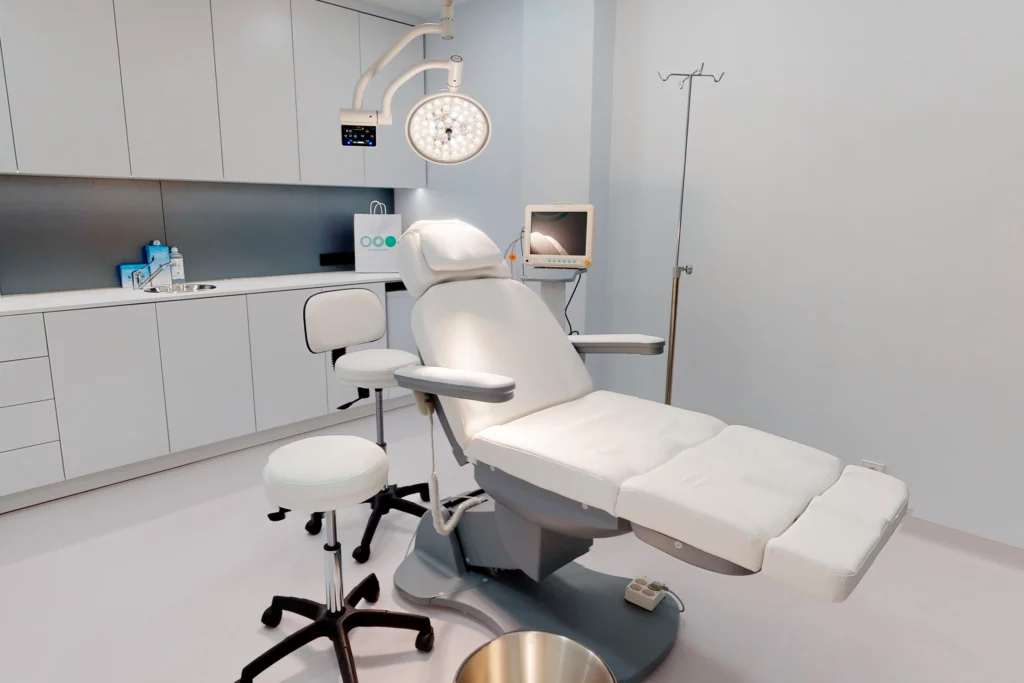
Hair transplantation is a surgical procedure and must be performed in a authorized healthcare center In order to carry out the corresponding activity, the facilities, hygiene measures, sterilization protocols, and team organization must be appropriate for the procedure and the patient's needs.
Before booking the surgery, ask exactly where it will take place, what health authorization the center has, and what measures are in place to maintain safety during the procedure.
To be able to check the sanitary authorization You can consult a hair transplant clinic General Registry of health centers, services and establishments (REGCESS) of the Ministry of Health. This registry allows you to search for healthcare facilities and view the available information about them. Verify that the information corresponds to the facility where the surgery will actually take place. If you have any doubts about the authorization of a specific facility, you can also request the clinic's health registration number and information from the relevant health authority.
In addition to verifying authorization, you can ask about the conditions of the surgical facilities, sterilization protocols, and the organization of the medical team during the procedure.
If the clinic does not clearly identify the center where the procedure will be performed or does not provide information about its health authorization, Request this information before hiringIt is important to confirm that the surgery will be performed at a center authorized for this activity and to know the conditions under which the procedure will take place.
The result of a hair transplant does not depend solely on the procedure. Recovery, the evolution of the implanted hair, and the detection of possible incidents are also part of the care process.
Therefore, before choosing a clinic, request a calendar of follow up specifying when the treatments will take place, what medical check-ups are planned, and who you should contact if you have any questions during your recovery.
En Hospital Capilar The protocol includes the following appointments:
Before booking your hair transplant at a clinic, check which appointments are included in the price and how you can contact them if any problems arise. A clinic should be able to clearly explain how post-operative care is organized.
Before-and-after photos help assess a clinic's results, but they must be analyzed critically. It's not enough for the images to be eye-catching: you need to verify if the cases are comparable to yours and if they show the evolution under similar conditions.
To assess whether a case can serve as a reference, look at the following aspects:
El result of a hair micrograft It depends on factors such as the diagnosis, the quality and capacity of the donor area, hair characteristics, treatment planning, and individual progress. Therefore, a responsible clinic should explain what results can be expected in each case, without guaranteeing a specific density or promising identical results to those of other patients.
Be wary of density guarantees, promises of miraculous results, or photographs that don't include enough information to interpret the outcome. Ideally, the clinic should explain what you can expect based on your individual characteristics and present images in a way that allows for reasonable comparison.
You can check the real cases of Hospital Capilar, where you will find before and after photos and video testimonials from patients to learn about different experiences and progress.

El hair transplant price It's an important factor when comparing clinics, but it should be analyzed in conjunction with the included services and the conditions of medical care. Two quotes with different amounts may include different services, so it's advisable to review their contents before making a decision.
Before hiring a hair clinic, check if the budget specifies:
Also ask if there are additional costs, What happens if you need an extraordinary review? y What are the conditions for cancelling or modifying the surgery?If any service is not clearly specified, request that it be detailed in writing before making the payment.
Transplants require follow-up care, and while many people recover without significant complications, questions or issues may arise that require medical evaluation. Therefore, if you are considering surgery abroad, for example, in Turkey, you should also consider how follow-up care will be arranged upon your return to Spain. Before traveling, check where your post-operative care will be provided, how you can contact the surgical team, and what options are available if you need an in-person evaluation.
En Hospital CapilarThe accumulated experience of more than 5.000 surgeries and 30.000 medical consultations allows us to understand the importance of the patient understanding the decisions behind a hair transplant before committing to the procedure.
If you're comparing clinics, these questions They can help you evaluate the information they offer and make a more informed decision:
It's not just about getting answers, but about ensuring that the medical team explains each decision clearly, resolves your doubts, and justifies the surgical indication according to your characteristics.
En Hospital Capilar We approach hair transplantation from a medical perspective, with a prior assessment that allows us to determine if surgery is indicated and to plan it according to the characteristics of each patient.
Our approach is based on three aspects:
In addition, we have clinics in Madrid, Murcia, Pontevedra, Vigo and Seville to bring hair care closer to patients from different areas.
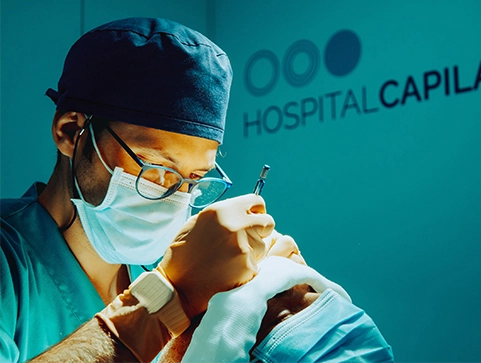
En Hospital Capilar we have 3 hair transplant packages at a fixed priceDesigned to offer you a solution tailored to your needs and the specifics of your case, each package includes a comprehensive approach to treatment, with the peace of mind of knowing the price upfront and receiving continuous follow-up from our medical team.